Management
Urban Creek Management
In urban areas, healthy aquatic and riparian ecosystems provide us with a multitude of benefits. They can provide habitat and wildlife corridors for terrestrial and aquatic species and are often home to species at risk. They can also increase property value and provide green space for community members to enjoy. Furthermore, a diversity of native species in the riparian zone can help with flood and erosion control, stormwater management and filtering pollution before it enters our waterway.
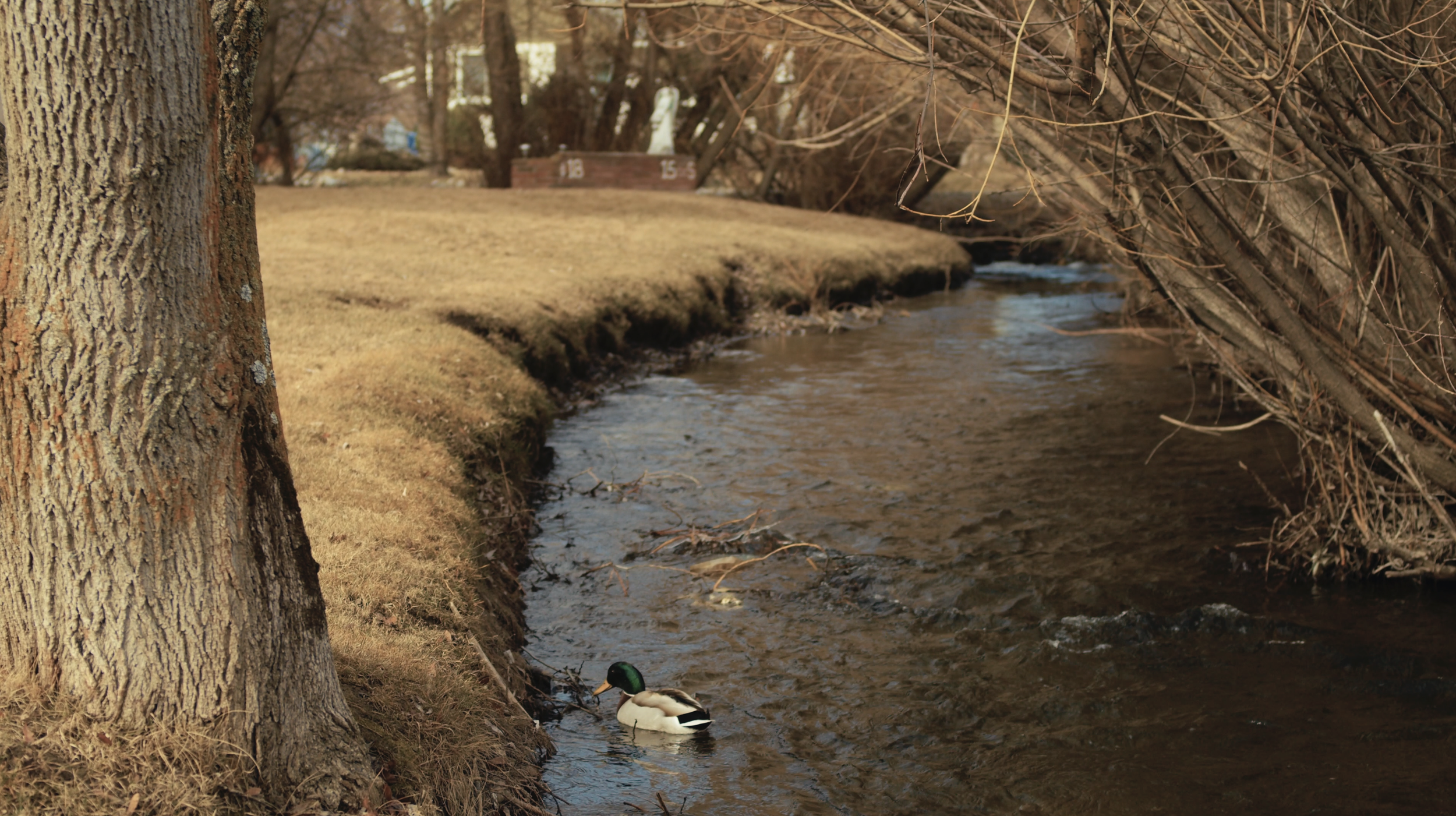
Because of all of these ecological and cultural values, managing and restoring a creek has many opportunities and challenges. Unfortunately, the health of Joseph Creek as a functioning aquatic ecosystem has been shaped by decades of disruptive anthropogenic activities. Many sections of the creek are in fact man made channels with 90-degree corners and little to no fish habitat, native species, or natural water flow. As a result of this, flooding, erosion, and monoculture have become common concerns along the creek.
Golden Willow Along Joseph Creek

Golden Willow encroachment at 15th Avenue South and 1st Street South, April 2nd, 2022
Non-native invasive plants are a widely acknowledged threat to global biodiversity. “Species invasion is probably the second most important cause, behind habitat loss, of the overall decline in biodiversity and the changing composition of riparian communities.” (Naiman, Decamps, McClain, Riparia, p230).
Golden Willow, an opportunistic non-native species that thrives in disturbed riparian areas, has become the dominant plant surrounding Joseph Creek. It is originally from Europe but has adapted well to BC climates and has established itself primarily along stream sides and wetland areas in the province. It has limited natural competitors in BC and is much more aggressive than native stream side plants (City of Cranbrook, 2015). This species of willow was introduced to Joseph creek many decades ago and has since spread from Idlewild lake to a vast majority of the creek.
No one can deny how beautiful this tree is, however, it is the cause of many issues along the creek. Although it’s not listed as an invasive species, it displays many invasive characteristics. It has a very aggressive root system that encroaches and raises the streambed, thereby decreasing its capacity for holding water. Golden Willows “have been choking out the [Joseph Creek] stream channel, exacerbating flooding and further habitat degradations” (Lotic Environmental, 2020). The roots of Golden Willows produce thick mats that can grow completely submerged and physically alter the natural bank of the creek.
Willows spread through seed and vegetative methods. Their vegetative spread, which happens through the rooting of shedding branches and the toppling of mature stems, is most concerning. Golden willows have brittle branches that easily break off. These are then carried downstream and root themselves along the bank. These branches also tend to get tangled up and create micro dams downstream. Normally, when trees over mature they die but willows tend to topple under their own weight, take root and begin their vertical growth over again. This tendency, coupled with the layering and damming of branches downstream, significantly contribute to the flood potential and bank erosion issues found within Joseph Creek (The City of Cranbrook, 2015).
Because Golden Willow outgrows, outspreads, and outcompetes most plants, there are very few native species present along Joseph Creek. However, a diversity of streamside plants is essential to the health of a riparian ecosystem. It stabilizes the banks, prevents erosion, acts as a buffer and filtration system, and creates shelter and habitat for wildlife. Also, an established canopy provides shade which helps to regulate water temperatures and dissolved oxygen levels.
Although golden willows provide some of these benefits, Joseph Creek is desperately needing a multi-layered and biodiverse riparian zone. Many areas of the creek are adjacent to roads and paved recreational trails and without a naturally diverse riparian area, much of the runoff flows directly into the creek. Such is the case at 15th Avenue South and 1st Street South in downtown Cranbrook where Golden Willow were selectively targeted for removal.